
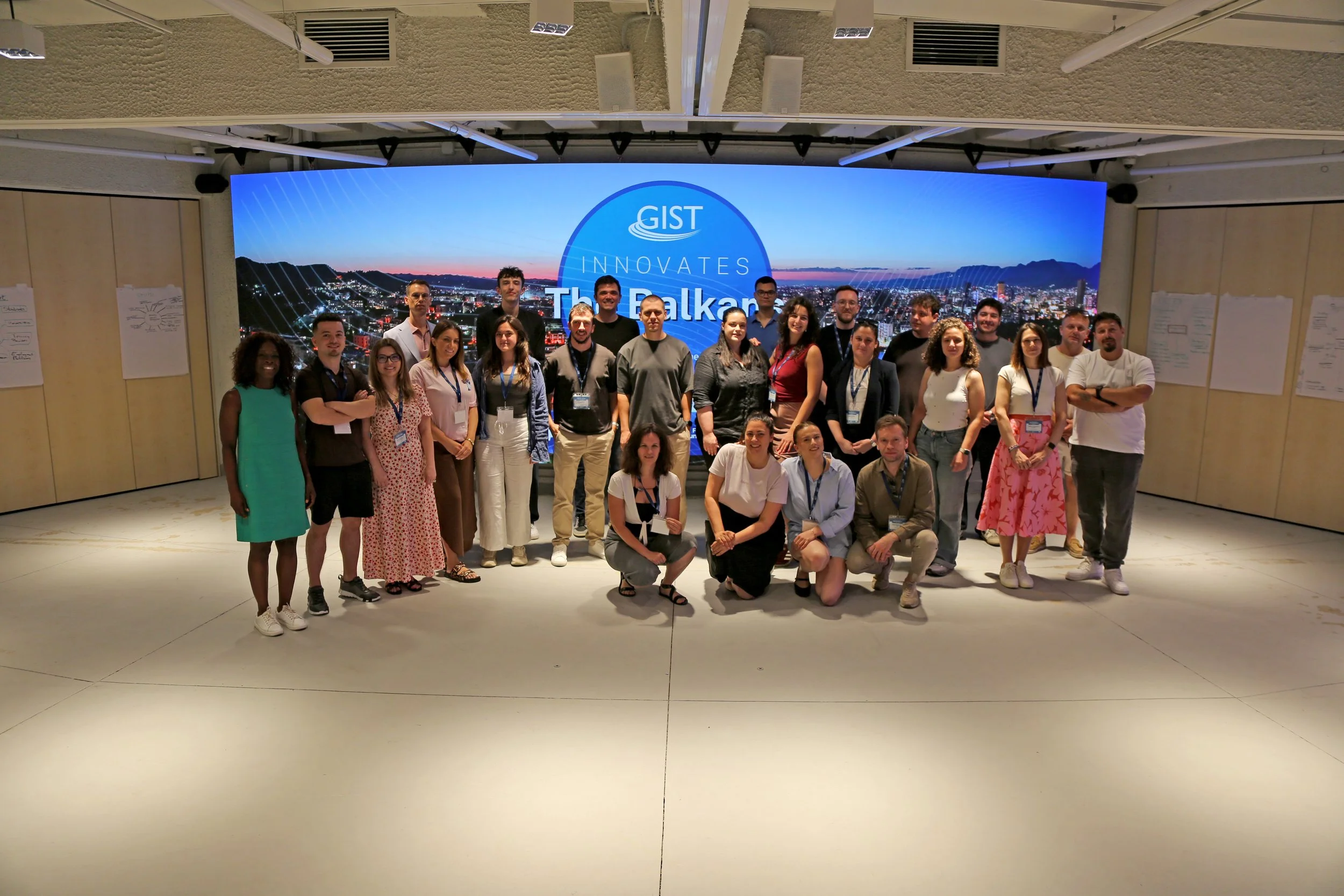
Fourth GIST Innovates The Balkans Program Yields Important Outcomes
2026 Cohort Completes In-person Training in Tirana, Albania
June 24, 2026
(5 minute read)
In the middle of June, 2026, GIST kicked-off its signature Innovates pre-accelerator program in Tirana, Albania with a dozen teams from across the Balkans. Twenty-three innovators from Bosnia & Herzegovina, Kosovo, North Macedonia, and Serbia met for a week at the Tirana Pyramid building in Albania’s capital for what would be an impactful beginning to ten weeks of learning.
A week doesn’t seem like much. It certainly doesn’t seem like enough time to validate a startup’s business model or product. Or conduct meaningful customer discovery interviews. Or become friends with strangers. And yet, that is exactly what happened during the week-long event.
Why the Balkans?
In just a short few decades, the countries of the Balkans have transformed their economies and created strong, distinct sectors, each being cultivated vigorously. The talent and ambition in the Balkans is formidable and their ventures fall into attractive categories such as business & productivity, hardware & ICT (internet and communications technology), health and wellness. All of these are high-growth sectors with appeal across borders.
But what the Balkans countries, the rest of Europe, and even the U.S., have in common is a difficult barrier for new workers trying to enter the workforce. The opportunities for younger professionals are far less available than in recent generations. Which is why programs like GIST’s Innovates The Balkans are coming at the perfect time to help shape young science and technology innovators into the next wave of successful startup founders.
The area’s proximity to other European regions and strong ties with the U.S. have made the Balkans attractive for outside investment. In fact, Plug and Play, the accelerator space in Tirana that hosted GIST Innovates in both 2025 and 2026, has successfully connected Silicon Valley funding to multiple Balkan startups. This goes a long way toward meeting the U.S. Department of State’s goals of creating “stability and mutually beneficial partnerships” in the region through “empowering local actors to resolve their own challenges.”
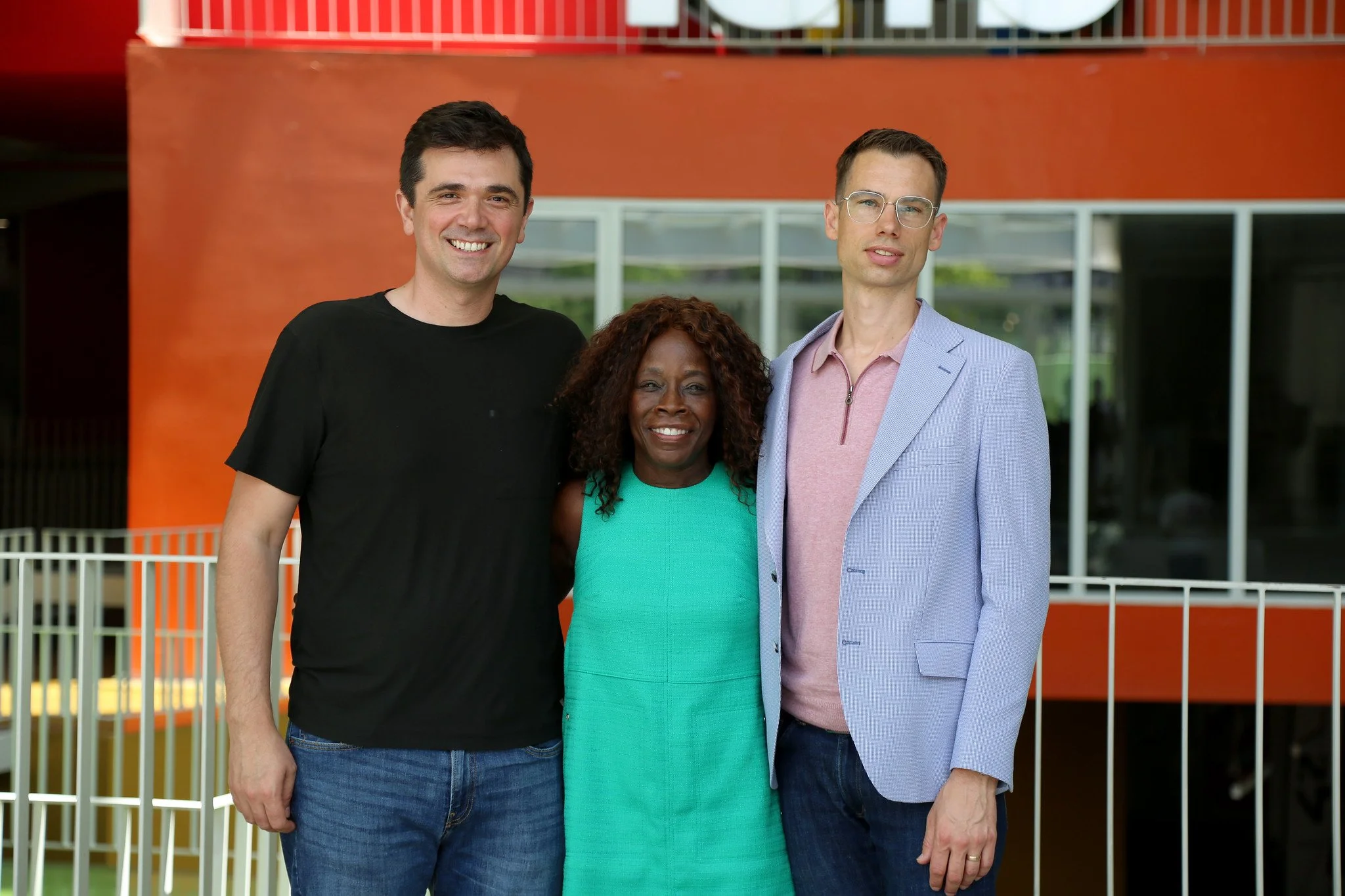
Led by Arizona State University instructors Visar Berisha, Denise McKenzie, and Zachary Holman, the week began with introductions and overviews of the goals of the program, one of which is to challenge the assumptions of each founder regarding the need they are trying to solve for with their product.
Each team presented their startup to the group, walking the room through the issue that they had discovered and how their solution addressed that need. Instructors then introduced the founders to the concept of product validation through the formation of a business hypothesis. This hypothesis was then tested through tools such as customer discovery.
Pain Points
One of the specific goals in customer discovery is to identify the customer pain points that can be used to validate a startup’s product. Pain points are what the startups are counting on as they propose their solutions to the market. They must be verifiable and quantifiable. Teams were asked to write out their customers’ perceived pain points, listing how customers currently solve those, and whether or not they are satisfied with the existing solutions.
As an example, Serbian startup Nutrimedik identified the issue of people taking medications and supplements in combination without knowing the potentially negative side effects. Their challenge was to show that these combinations were harmful and that customers would benefit, and be willing to pay for, their solution that would warn them of any potential risks. The team used the week to begin interviewing people who take medications and supplements to learn more about their concerns and the likelihood of them seeking out a solution.
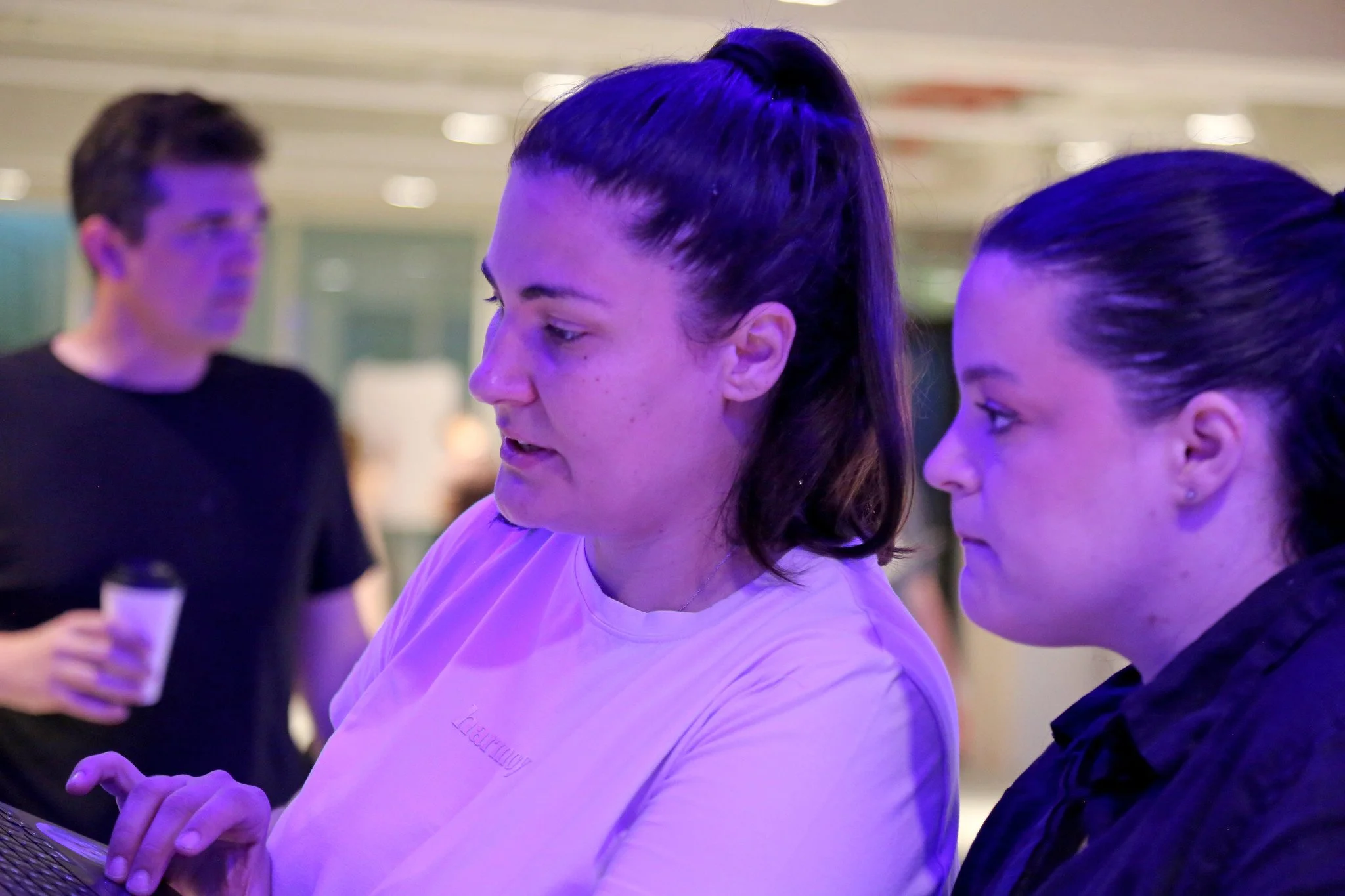
“It’s extremely valuable to have these experienced people come in and with a fresh set of eyes give you feedback, challenge you, and really help you in a way that sets us up for success.
These are not regular industry folks. These are people who work with hundreds of startups. It’s incredibly valuable to get this kind of input.”
-Sofija Drecun & Gordana Novakovic | Nutrimedik | Serbia
Not all of the teams were solving consumer concerns. For other teams, their solution sought to help businesses save money in their existing business process. In these cases, teams identified gaps or inefficiencies in an area of a business and then had to prove that they could save the business time and/or money through their solution. The Kosovar team Seal Skin Covers believed their innovative approach to measuring bodies would result in fewer returned garments due to incorrect sizing. The solution would save retailers the cost of the returns plus had the added benefit of building trust with the customer.
Another tool for teams to test their hypothesis further was by mapping their customers’ workflow. In this process, the teams diagram as much of the process as they can to show the existing journey a customer takes when they try to accomplish their goal. Using the example of the garment industry, the Seal Skin Covers team showed that people who order garments online use a bracket method whereby they order the size of an item plus one size smaller and one size larger. This results in a guaranteed return of two thirds of the ordered items. For the retailer, this was the verified pain point that the team could solve for.
Next, the teams created an ecosystem map. This map required them to identify key stakeholders, competitors, any government requirements, and any other factors in the value chain. This meant the teams had to know where they fit into that ecosystem, what factors affected their business model, and where the inefficiencies and opportunities might be. As is often the case, by this time the teams have started to get a better sense for their solution and how it fits into their understanding of the market. This is also the time where teams start to see opportunities for pivoting their solution to a new idea.
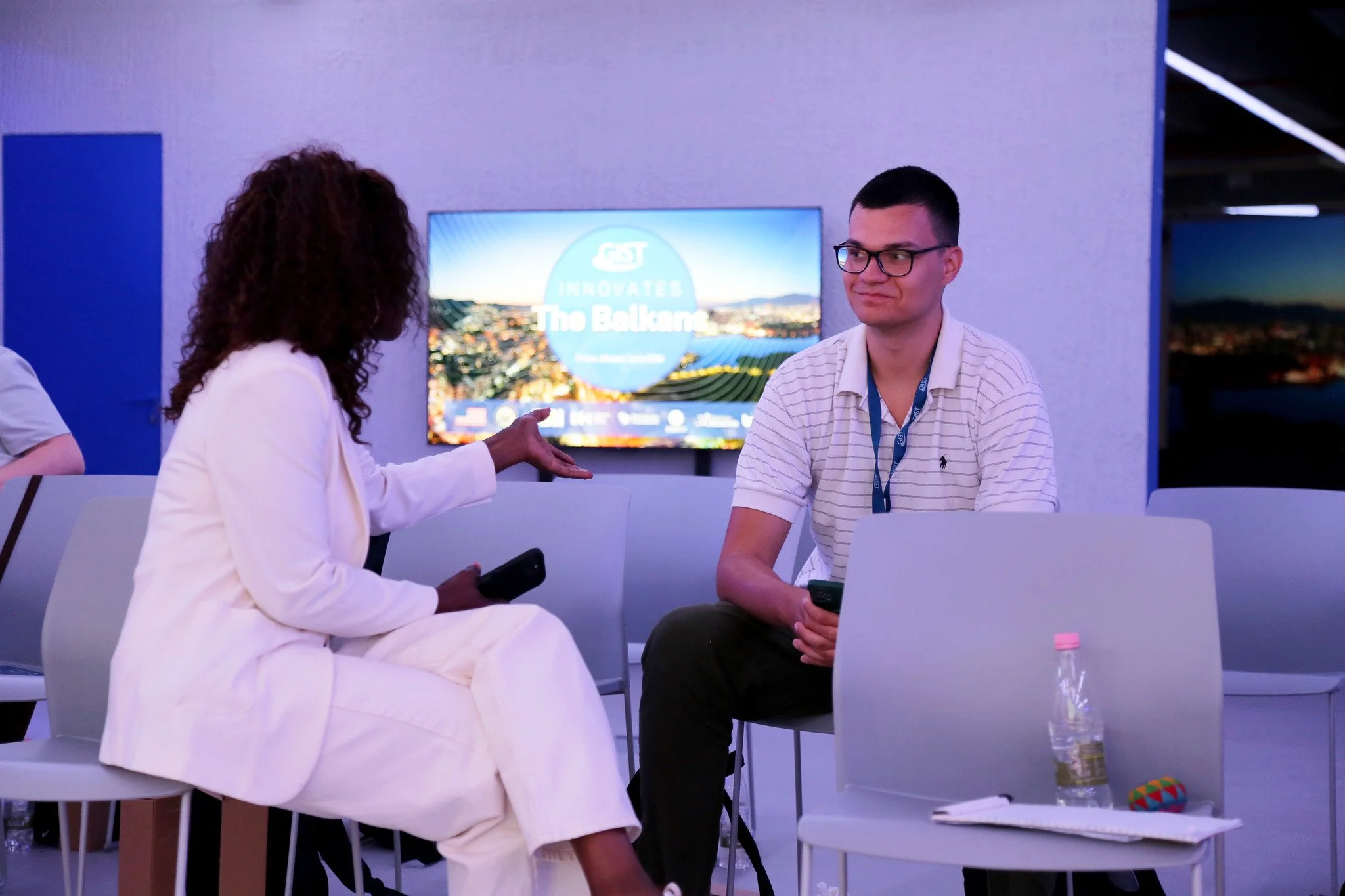
“I’ve learned a lot of things. It’s a huge learning journey. Because it’s a fast paced environment, you are both learning and creating at the same time.”
-Ivan Rangelov | Adaptly Learn | North Macedonia
Each day, the teams received individual office hours with one of the three instructors. This time was used to further dive into what the teams were learning, testing their assumptions, and discovering additional lines of inquiry.
By the end of the week, the teams had all gotten their initial feedback from their customer interviews, bolstering the case for their solution, and giving them insights to make them even stronger. In some cases, new opportunities arose from the interviews that could open doors to additional features or products.
Growth on Display
The program concluded with all of the teams presenting their learnings to the group. It was at this point that the benefits of the week’s instruction became most apparent. Teams showed how they had their assumptions about their solution tested, how these new insights helped to validate or reshape their product.
Probably the most satisfying aspect of the week for the instructors was seeing the new understandings that the teams gained of their market and where their solution fits into that market. In such a short period, to have the metaphorical lightbulb turn on in the minds of some of the participants, is one of the most rewarding parts of putting on these programs.
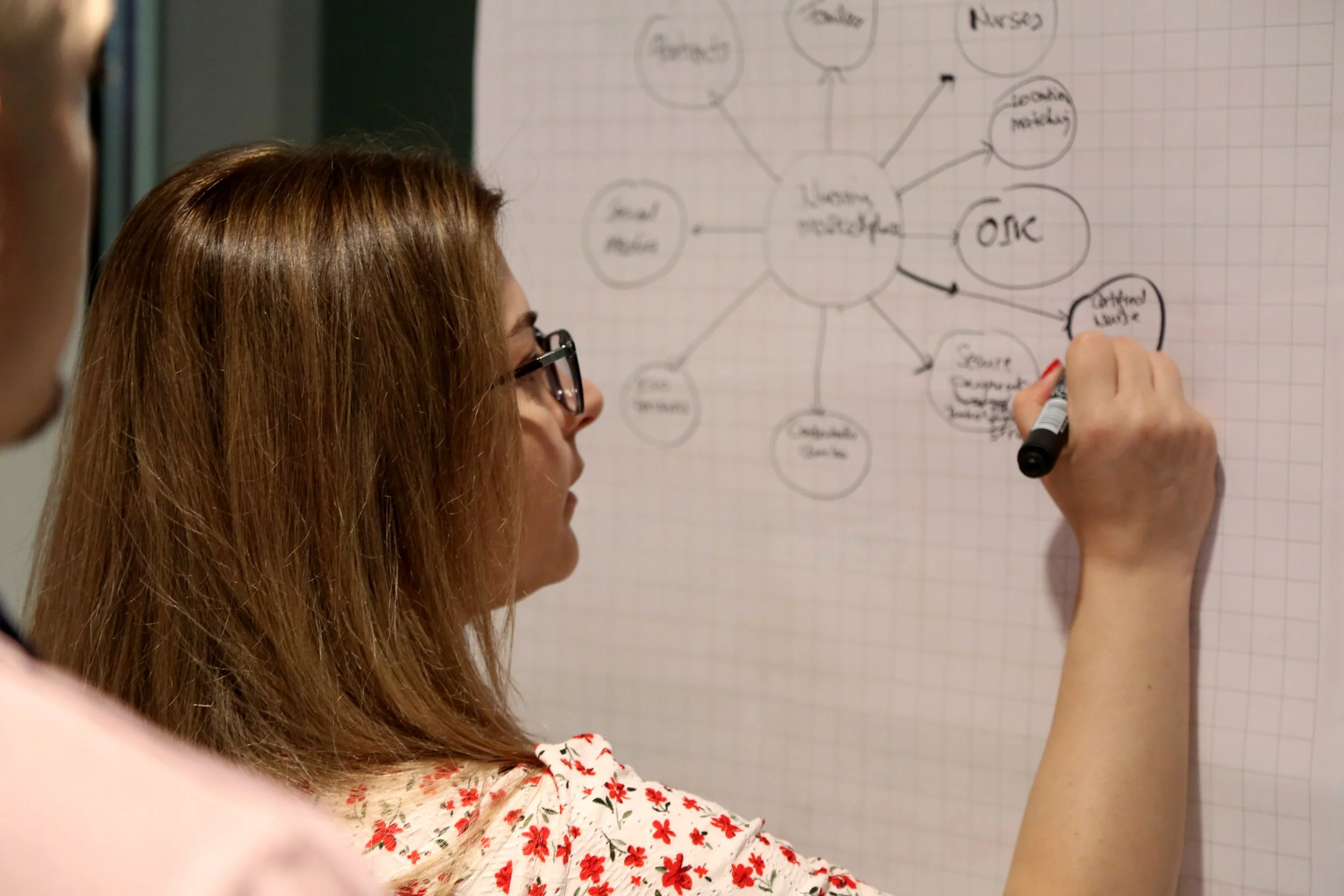
“I have had so many insights, and information, advice and feedback. This is one of the best experiences for building a product and solving a problem.”
- Helidona Shabani | Nursing Marketplace | Bosnia & Herzegovina
But the process isn’t complete. Over the next two months, the teams will meet weekly with their mentors to discuss their customer discovery findings, further helping to clarify their business model, their product design, and their plan for success.
Learn more about this year’s cohort:
Bosnia and Herzegovina
Anita Lalic | Ivana Simic
Chupsi
Chupsi is a food-tech innovation that bridges the gap between traditional Herzegovinian heritage and modern circular economy principles. Our project focuses on the biotechnological valorization of food industry by-products to create functional, high-value snacks.
Tamara Teodorovic | Nermin Zejnilovic
PLUMAT
PLUMAT has developed a new type of eco-friendly leather from plum waste. Plum waste is currently discarded, creating environmental issues. PLUMAT, through a process of cleaning, dehydrating, and powderization, creates a foundation material with the waste. Natural ingredients like vegetable glycerin, agar-agar, PLA, and water are added to make a flexible material which is pressed into sheets. The material can be used in clothes, bags, and other textile-based products.
Kosovo
Gerti Kida | Vesa Greiçevci | Edesa Ibrahimi
KickStart
Kickstart is a digital platform that helps students and young professionals find internships, micro-projects and first job opportunities through a fairer and skill-focused hiring process. Rather than relying only on CVs, users create a profile showcasing projects, certificates, volunteer work, and practical abilities. Employers can evaluate applicants through custom questions and short scenario tasks allowing for a more meaningful process. By combining accessibility with effective recruitment tools, Kickstart aims to reduce the barriers for beginners, support talent without connections or experience, and create better first opportunities for youth in Kosovo and across the Balkans.
Olti Gjaka | Ben Gorani
Loopd
Loopd is a structured idea-to-implementation platform for complex, team-based software projects. The hard part of building isn't writing code anymore, it's knowing what to build. The Al interviews subject matter experts the way a project manager with domain expertise would and then translates everything into a technical plan that both the team and Al coding agents can build from. Additionally, the Al translates this information, and team insights, so every member receives it in their own domain language.
Helidona Shabani | Afrim Shabani
Nursing Marketplace
Nursing Marketplace is a platform that helps families find verified nurses for home care in a faster, safer, and more trusted way. Today, many people still rely on personal contacts or social media when they need care at home, and that can be stressful and uncertain. We are using marketplace technology to connect families with qualified nurses based on service, location, and availability. We are also building Al tools to guide users toward the right type of care, making the process simpler and more accessible. Our goal is to bring more trust, structure, and ease into home care for both families and nurses.
Dielleza Galica | Synim Selimi
Paystorm
Paystorm is an Al-powered accounts receivable platform that helps US small and medium businesses collect overdue invoices while maintaining control of customer relationships. It integrates with your accounting tool, then uses an Al agent that learns each client's payment behavior to send reminders, offer payment plans, and escalate across email, WhatsApp, and your own domain, all from your business identity. By doing so, we help businesses turn a
stressful, manual process into a reliable system that keeps revenue moving without straining client relationships.
Bardh Rushiti | And Hoxha
Seal Skin Covers
We've developed a proprietary 3D measurement engine that transforms smartphone scans into precise, production-ready dimensions for custom manufacturing. The platform automatically extracts measurements, removing the need for manual measuring workflows and dramatically simplifying the ordering process for custom-fit products. Originally built for custom protective covers including automotive, marine, and patio furniture applications the technology enables scalable, accurate mass customization.
North Macedonia
Ivan Rangelov
Adaptly Learn
Adaptly Learn is a web application that turns your documents, primarily books, into chapter-by-chapter quizzes. Students practice section by section and build up performance statistics as they go. Teachers get a dedicated dashboard with student- and group-level analytics, so they can quickly spot where individuals or whole classes are struggling. The goal is to make every learning path unique, because everyone moves at a different pace. While Adaptly Learn is built around classroom learning, the same engine works anywhere people need to learn from documents, including employee onboarding, compliance training, and certification prep.
Boban Bragorski | Marija Stankova Medarovska
Orlex
Orlex is an Al-powered policy intelligence platform designed to help businesses track legislative developments, understand their impact, and engage effectively in public consultations, while ultimately supporting compliance once regulations are adopted.
Dalibor Vuchikj
Roomy
Modern society faces intense digital overload, while existing learning and work platforms often remain functional but cold, rigid, and lacking emotional connection. Roomy responds to the growing demand for personalized and human centered digital experiences in education, creative industries, and mental wellness.
The solution combines extended reality (XR), artificial intelligence (Al), and immersive artistic design inspired by lo-fi aesthetics to create calming, adaptive virtual spaces for focus, creativity, and productivity. By integrating intelligent technology with emotionally engaging environments, the platform transforms digital interaction into a more natural and inspiring experience. Roomy redefines how people learn, work, and create by offering immersive spaces designed to enhance concentration, comfort, and well-being in the digital age.
Serbia
Andjela Stojanovic | Mila Simic
Fino App
Fino App is a financial management platform built for the creator economy. Digital creators earn income across 3 to 7 platforms simultaneously, yet have no single tool designed to consolidate and make sense of all of it. Our technology aggregates multi-platform revenue streams into one real-time dashboard, applies creator-specific financial logic, and generates clear analytics.
Sofija Drecun | Gordana Novakovic
Nutrimedik
NutriMedik is a platform that helps people manage interactions between medications, supplements, food, and drinks in a way that fits their daily lifestyle - sleep, meals, waking routines, and everything in between. While most existing tools focus only on drug-drug interactions, guidance on how therapy interacts with diet and daily habits is fragmented and hard to use. We combine pharmacology, nutrition science, and user context into a structured database and recommendation engine that generates personalized intake plans for complex therapies and supplement regimens alike. The goal is to turn complex interaction data into clear, actionable guidance that improves adherence and reduces risk.
GIST Innovates The Balkans Partners
